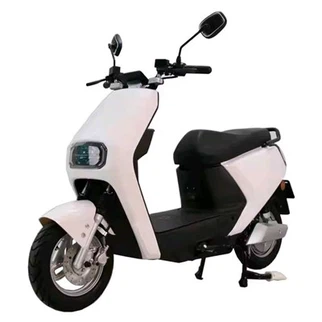
When discussing the safety of electric motorcycles, a comprehensive analysis from multiple dimensions is necessary, including technical configuration, regulatory standards, user behavior, and actual accident data. Currently, electric motorcycles have significantly improved safety by integrating multiple active safety technologies, optimizing structural design, and adhering to strict safety standards. However, users still need to pay attention to proper use and maintenance.
I. Active Safety Technologies: From "Passive Defense" to "Active Intervention"
ABS Anti-lock Braking System
ABS has become standard equipment on high-end electric motorcycles. For example, the Ninebot M3 95c MAX is equipped with a dual-channel valve-type ABS, combined with a 240mm front disc brake and a 200mm rear disc brake, which can prevent wheel lock-up during emergency braking, ensuring the vehicle stops stably. Studies show that ABS can reduce motorcycle accident rates by approximately 30%, especially on slippery surfaces or in emergency braking scenarios.
TCS Traction Control
TCS monitors wheel speed and adjusts motor torque output in real time to prevent slippage. For example, both the Ninebot Fz series and the Luyuan S70 are equipped with TCS (Traffic Control System), which automatically suppresses drive wheel spin in rainy weather or when climbing hills, improving handling stability. This technology is crucial for the safety of novice riders or those riding in complex road conditions.
Intelligent Lighting and Illumination Systems: Some models are equipped with a full-view lighting system (such as the ALC system in the Ninebot M3 95c MAX), which improves nighttime visibility through wide-angle lenses and high-brightness LEDs, reducing accidents caused by insufficient visibility.
Battery Safety and Thermal Management: Battery safety is paramount for electric motorcycles. Ninebot electric vehicles predict battery risks through cloud-edge-device collaboration, combined with an intelligent BMS (Battery Management System) to monitor parameters such as temperature and voltage in real time, preventing thermal runaway. For example, its "Ironclad Body" solution reduces the risk of spontaneous combustion by over 44.7%, and the frame strength is 10 times higher than industry standards.
II. Regulations and Standards: From "Wild Growth" to "Compliance"
International Safety Certification: Electric motorcycles must comply with safety standards such as UL 2849, covering key components such as batteries, motors, and charging systems. Some countries also require artificial sounds to alert pedestrians when driving at low speeds (such as the EU's AVAS regulation).
Strengthened Domestic Regulation: China implements strict classification management for electric motorcycles, requiring models exceeding 25 km/h to be managed as motor vehicles and drivers to hold motorcycle licenses. This measure effectively filters out over-standard modified vehicles, reducing accident risks.
Industry Self-Regulation and Standard Setting: Leading companies such as Ninebot and Luyuan have spearheaded and participated in the formulation of over 110 domestic and international technical standards, promoting industry safety norms. For example, Ninebot's Lingbo OS system achieves millisecond-level response, ensuring "time determinism" of braking commands and eliminating system latency.
III. User Behavior: Key Variables for Safety
Illegal Modification and Speeding: Some users improve performance by removing speed limiters or installing high-power motors, leading to a surge in the risk of vehicle loss of control. For example, some "electric motorcycles" are actually illegally modified electric motorcycles, reaching speeds of up to 80 km/h, far exceeding safety standards.
Insufficient Safety Awareness: Electric motorcycle riders often neglect to wear helmets, illegally carry passengers, or run red lights. Data shows that 77.2% of fatal electric bicycle accidents in China occur on urban roads, with 38.7% of these related to intersection violations.
Lack of Maintenance and Inspection: Battery aging, tire wear, or brake failure are common hazards. Users need to regularly check battery condition (for bulges or leaks), tire pressure, and brake pad thickness to avoid accidents caused by equipment malfunctions.
IV. Accident Data and Case Analysis: Empirical Evidence of Improved Safety: Taking Ninebot electric bicycles as an example, its cumulative shipments in the Chinese market exceed 9 million units, and it continuously optimizes its safety algorithms through OTA upgrades. User feedback shows that the combination of ABS and TCS reduces the probability of skidding on wet roads by over 60%.
Typical Accident Scenarios: Skidding in Rain: Models without TCS are prone to loss of control during rapid acceleration, while TCS models maintain traction through motor torque adjustment.
Emergency Braking: ABS models reduce braking distance by approximately 20% compared to models without ABS at 60 km/h during emergency braking. Battery Fires: Compliant batteries, through BMS systems and thermal management technology, keep the risk of thermal runaway at an extremely low level, while illegally modified batteries frequently cause accidents.
V. Conclusion: Safety is "Reliable," but a Rational View is Needed
The safety of electric motorcycles is significantly better than that of traditional gasoline motorcycles and early electric bicycles. Their core advantages lie in:
Technological Empowerment: Active safety technologies such as ABS and TCS greatly reduce the risk of runaway.
Standardization and Regulation: Domestic and international regulations and industry self-regulation promote product compliance;
User Education: It is necessary to strengthen awareness of safe riding and the popularization of equipment maintenance knowledge.
However, safety is still affected by both user behavior and product quality. Choosing compliant brands (such as Ninebot and Green Source), avoiding illegal modifications, and conducting regular maintenance and inspections are key to ensuring the safety of electric motorcycles. In the future, with the maturity of technologies such as solid-state batteries and wireless charging, the safety of electric motorcycles will be further improved, redefining the safety standards for short-distance travel.