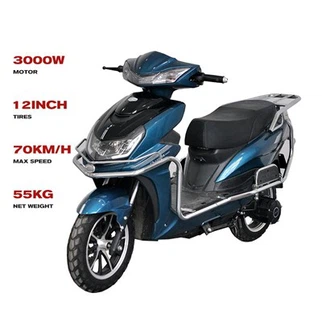
This isn't just an environmental issue; it's a fundamental economic calculation. From energy costs to maintenance expenses, from policy benefits to long-term operating costs, electric motorcycles demonstrate a significant price advantage across multiple dimensions, and this gap continues to widen with technological advancements and market expansion.
Energy Costs: Electricity Costs are Only 1/14 to 1/27 of Gasoline Costs. Energy consumption is the biggest variable in vehicle operating costs. In China, an electric motorcycle consumes approximately 15-20 kWh per 100 kilometers, costing only 10-20 RMB at residential electricity prices; while a gasoline-powered vehicle consumes 7-10 liters of fuel per 100 kilometers, costing as much as 50-80 RMB. This means that for the same 100 kilometers, an electric version can save 40-60 RMB. Research data from Vietnam is even more striking: the energy cost of a motorcycle is 14 times that of a lead-acid battery electric vehicle and 27 times that of a lithium-ion battery electric vehicle. This gap stems from a fundamental difference in energy efficiency-electric motors convert 90-95% of electrical energy into useful work, while internal combustion engines convert only 30-35%. In more intuitive terms, "equivalent fuel consumption" means an electric vehicle travels approximately 1,000 miles per gallon of gasoline.
Maintenance Costs: 30%-50% Savings Annually. Electric vehicles have a simpler structure; their power system (motor and battery) has far fewer components than the engine and transmission of a gasoline car, resulting in extremely low routine maintenance requirements. Gasoline cars require regular oil, spark plug, and timing belt changes, with annual maintenance costs 3,000-4,000 yuan. Electric vehicles only require checks on the three-electric system (battery, motor, and electronic control system) and occasional changes to the air conditioning filter and brake fluid, costing less than 2,000 yuan annually. A Camry owner calculated that three years of maintenance costs exceeded 12,000 yuan, while the Han EV's three years of maintenance only cost 2,000 yuan, a difference of over 2,000 yuan per year. In the long term, these savings are considerable-a UN Environment Programme report predicts that by 2050, electric motorcycles could save owners $350 billion globally.
Battery Life and Warranty: 8 Years/150,000 km as a Baseline
Battery replacement costs were once considered the Achilles' heel of electric vehicles, but modern technology has changed the game. Currently, lithium batteries have a lifespan of 3-10 years, and most manufacturers offer an 8-year/150,000 km warranty. Even if replacement is needed, battery pack costs are decreasing-when battery prices drop to $400/kWh, cost break-even can be achieved with an annual mileage of over 5,000 km. For users with a daily commute of 20-35 km, battery life typically exceeds 5 years, averaging only a few dollars per day.
Policy Benefits: Double Subsidies for Purchase and Use
Many countries and regions offer purchase subsidies and tax breaks to promote electric vehicles. In China, a combination of measures such as purchase tax reductions, vehicle and vessel tax exemptions, and purchase subsidies can save tens of thousands of yuan at once. Similar measures exist in the EU; in a low-oil-price environment, electric two-wheelers with an annual mileage of over 9,000 km are competitive. Furthermore, electric vehicles enjoy implicit benefits such as exemption from traffic restrictions, parking discounts, and the convenience of home charging, further reducing overall operating costs.
Long-Term Total Cost: Savings of 30,000-50,000 Yuan Over Five Years
Based on an average annual mileage of 15,000 kilometers and a five-year lifespan, the total cost of a gasoline-powered car in the 100,000-150,000 yuan price range is approximately 210,000-230,000 yuan. After subsidies, an electric vehicle costs only 180,000-200,000 yuan, resulting in a net saving of 30,000-50,000 yuan. Compared to the Corolla, the Qin PLUS EV saves 27,000 yuan in electricity costs and 6,000 yuan in maintenance over five years. Although insurance costs are higher by 3,000 yuan, the overall net profit is still 40,000 yuan. More importantly, the continued decline in battery costs will amplify this advantage-when battery prices drop to $180/kWh, even with less than 2,000 kilometers of driving per year, electric vehicles will be more economical.
Additional Benefits in Environmental Protection and Efficiency
Even if the grid generates electricity from fossil fuels, electric motorcycles still emit significantly less CO2 per mile than gasoline-powered vehicles. They are quieter, produce less noise pollution, and their lightweight design makes them more environmentally friendly than electric cars. In Kenya, the total life-cycle cost of electric motorcycles is significantly lower than that of gasoline-powered vehicles, although battery replacement is expensive, maintenance costs are extremely low.
E-Motorcycles are not just a marketing gimmick; their cost savings compared to gasoline-powered vehicles are a proven fact, built on the ironclad principles of energy efficiency, simplified maintenance, policy support, and economies of scale. From daily commutes to commercial operations, from individual users to fleet managers, the economic advantages of electrification are undeniable. As battery technology matures and charging infrastructure becomes more widespread, consumers still calculating "when will we break even" will find that the cost-saving tipping point has already arrived, and continuing to choose gasoline-powered vehicles is truly "uneconomical."