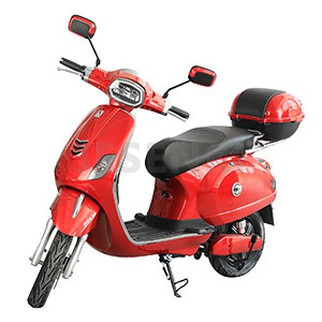
In the global logistics industry's shift towards green and efficient operations, electric tricycles, with their unique advantages, are moving from the "capillaries" of urban delivery in China to the core nodes of the global logistics network. From the daily transportation demand of hundreds of billions of express parcels in China to their booming sales in overseas markets, this seemingly simple mode of transportation actually combines the advantages of economy, flexibility, and technological innovation, becoming a "secret weapon" for cost reduction and efficiency improvement in the logistics industry.
I. Economy: Low Cost Leveraging High Efficiency The core advantage of electric tricycles lies in their extreme cost control capabilities. Taking China as an example, the price of a compliant electric tricycle is typically between 5,000 and 12,000 yuan, only 1/3 to 1/5 of that of a new energy micro-truck. Their operating costs are even lower: no C1/C2 driver's license is required, significantly reducing training, insurance, and annual inspection fees; the energy consumption cost of electric drive is only 1/5 to 1/3 of that of a fuel-powered vehicle, saving over 5,000 yuan in fuel costs annually based on an average daily mileage of 50 kilometers. Furthermore, electric tricycles have a simple maintenance structure, low failure rate, and maintenance costs that are only about 30% of those of four-wheeled vehicles.
This cost advantage is particularly significant in "last-mile" delivery. Taking a courier outlet in Beijing as an example, after using electric tricycles, the cost per delivery dropped from 1.2 yuan to 0.8 yuan, and the average daily delivery volume increased by 40%, while the total cost of vehicle purchase and operation was only half that of a mini-truck. This combination of "low cost + high efficiency" makes electric tricycles the optimal solution for courier companies to balance capacity and cost.
II. Flexibility: Navigating the City's "Capillaries"
Another major advantage of electric tricycles is their unparalleled flexibility. Their width is typically less than 1.2 meters, and their turning radius is less than 3 meters, allowing them to easily enter areas inaccessible to large vehicles, such as old residential areas, urban villages, and narrow alleyways. For example, in Shanghai's Shikumen alleyways, electric tricycles have an 80% higher throughput rate than mini-trucks, and delivery time is improved by 30%. Furthermore, their parking convenience far surpasses that of four-wheeled vehicles-no dedicated parking space is required, allowing for immediate parking and unloading, significantly reducing the time spent searching for parking.
This flexibility has also been validated in cross-border logistics. The popularity of domestically produced electric tricycles in the European and American markets is partly due to their adaptation to the "narrow streets + low density" delivery scenarios of overseas cities. For example, in London, electric tricycles can navigate Victorian alleyways only 2 meters wide to complete door-to-door deliveries, while traditional trucks rely on transfer stations, increasing transportation costs by more than 20%.
III. Technological Upgrades: From "Wild Growth" to "Compliant and Intelligent" Early electric tricycles faced controversy due to unclear management and illegal operation, but in recent years, technological upgrades and policy regulations have enabled them to undergo a transformation. Taking China as an example, cities like Beijing and Shenzhen have implemented "four unified" management (unified identification, coding, insurance, and positioning), and some vehicles are equipped with smart chips, reversing voice prompts, and fire-fighting linkage systems, significantly improving safety. For example, one brand of electric tricycle uses high-energy-density ternary lithium batteries, achieving a range of 120 kilometers and supporting 2-hour fast charging; the frame employs a thick-walled, reinforced double-layer welding process, increasing load-bearing capacity by 50% and enabling stable transport of 100 kg of goods.
Overseas, technological innovation in electric tricycles focuses more on intelligence and environmental friendliness. For instance, models launched in the European market are equipped with IoT modules, enabling real-time monitoring of battery status, driving trajectory, and load data to optimize delivery routes; the US market has introduced solar-assisted charging models to further reduce energy consumption. These technological upgrades have transformed electric tricycles from "low-end tools" into "intelligent logistics terminals."
IV. Policy and Market: Global Expansion Driven by Dual Forces
The rise of electric tricycles is inseparable from the dual impetus of policy and market forces. In China, under the "dual-carbon" strategy, the express delivery industry's use of electric tricycles can reduce carbon emissions by over 16 million tons annually, equivalent to planting tens of millions of trees. The government accelerates their adoption through subsidies and priority road rights. For example, one region provides a subsidy of 3,000 yuan per compliant electric tricycle and allows them to enter core urban areas during peak hours.
Overseas markets, driven by the development of cross-border e-commerce and logistics, offer new opportunities for electric tricycles. China's efficient customs clearance processes and multinational trade agreements enable rapid customs clearance for goods like tricycles, accelerating overseas delivery. For instance, a cross-border logistics company, by optimizing its transportation processes, reduced the transportation time for electric tricycles from China to Europe to 15 days, lowered costs by 40%, and boosted its overseas sales by 200% annually.
V. Future Outlook: From "Chinese Solution" to "Global Standard"
While electric tricycles have demonstrated strong competitiveness, their future development still requires overcoming bottlenecks such as range and charging infrastructure. For example, current mainstream models have a range of only 100-150 kilometers, which is insufficient for long-distance delivery needs; the number of DC fast charging stations is insufficient, leading to long queues during peak hours. However, with advancements in battery technology (such as solid-state batteries) and charging networks, these problems are expected to be gradually resolved.
More noteworthy is the transformation of electric tricycles from a "Chinese specialty" to a "global standard." For example, an international logistics equipment manufacturer has partnered with European automakers to develop electric tricycles that meet EU CE certification standards, achieving international levels in load capacity, range, and safety. In the future, with the advancement of the Belt and Road Initiative, electric tricycles are expected to become a "new link" connecting Chinese manufacturing with global logistics, contributing "Chinese wisdom" to global green logistics.
Conclusion: The rise of electric tricycles is essentially a balancing act by the logistics industry towards the triple goals of "efficiency, cost, and environmental protection." With the simplest design, it solves the most complex delivery problems; with the lowest cost, it achieves the highest operational value. From the streets and alleys of Chinese cities to the vast overseas markets, this "small vehicle" is reshaping the future of global logistics with its "great wisdom."