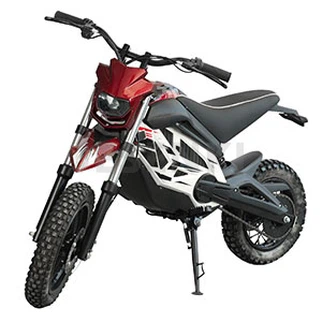
There's no standard answer to this question, just like asking how long a mobile phone will last. It depends on battery quality, usage habits, and environmental factors. Based on industry data and actual user feedback, the battery life of mainstream lithium-ion scooter models is between 2 and 5 years, equivalent to 300-1000 full charge cycles. However, this isn't the end. High-quality batteries, with careful maintenance, can last over 6 years, while inferior batteries may fail after just over a year.
Cycle Count Determines Theoretical Lifespan
The lifespan of a lithium-ion battery is essentially defined by the number of charging cycles. One cycle refers to using the battery from full charge to empty and then fully charging it, not simply plugging and unplugging the charger. Mainstream scooter batteries are generally labeled for 300-500 cycles, at which point the capacity decays to 70-80% of its initial value. This means that if you consume 50% of the battery during your daily commute and recharge, that's approximately 365 half-cycles per year, equivalent to 182 full cycles, meaning the battery can last 2-3 years. However, under optimal conditions-shallow charging and discharging, avoiding high temperatures-high-quality battery cells can achieve 800-1000 cycles, extending their lifespan to 4-5 years.
Four Factors That Silently Kill Your Battery
1. Charging Habits: Deep Discharge is a Battery Killer. Lithium batteries are most vulnerable to starvation and overcharging. The ideal strategy is to charge as needed, keeping the charge level between 20-80%. Frequent full charging to 100% accelerates the aging of the positive electrode material, while prolonged periods below 20% lead to lithium plating on the negative electrode, causing irreversible damage to the battery.
2. Temperature Threats: Batteries are more sensitive to cold than heat. 0°C to 40°C is the golden operating temperature. Above 50°C, electrolyte decomposition accelerates, halving the battery's lifespan. Charging after prolonged exposure to direct sunlight in summer, or forcibly riding in sub-zero temperatures in winter, will shorten the battery's lifespan. Tests show that after 500 cycles at 55°C, the capacity decays significantly faster than at room temperature.
3. Riding Style: Aggressive Riding is a Hidden Killer. Rapid acceleration, continuous uphill climbing, and overloaded riding will cause the battery to continuously discharge at a high current, raising its internal temperature by 5-10°C and exacerbating chemical side reactions. Gentle acceleration habits and maintaining a cruising speed of 20-25 km/h will allow the battery to operate within its optimal efficiency range.
4. Battery Quality: You get what you pay for. Major manufacturers like Tianneng and Chaowei use 18650 power lithium-ion cells with a cycle life of over 800 cycles, while generic soft-pack batteries may fail after only 300 cycles. Lithium iron phosphate batteries are more durable than ternary lithium batteries, with a lifespan of over 8 years, but their energy density is lower, and they are commonly found in high-end vehicles.
Practical Tips for Extending Battery Life: To extend the battery's lifespan, cultivate three habits:
- Charging Strategy: Use the original charger and avoid fast charging. While fast charging is convenient, the high voltage required to fully charge in 2-3 hours accelerates plate aging. Using standard charging daily will extend battery life.
Perform calibration monthly, charging from 20% to 100% and then discharging back to 20%, to help the BMS correct the State of Charge (SOC).
- Storage and Maintenance: When not in use for extended periods, maintain the battery level between 40-60% and store in a cool, dry place. Charge the battery every 3 months to prevent over-discharge due to self-discharge.
- Environmental Avoidance: After riding in winter, allow the battery to rest at room temperature for 30 minutes before charging to prevent short circuits caused by condensation. In summer, avoid charging immediately after midday sun exposure; charging in the evening or at night is recommended.
Signs of End-of-Life Battery Life: Battery degradation is irreversible, but it will provide early warnings. If you notice a sudden drop in range from 40 km to below 25 km, or a significant reduction in charging time, it indicates the capacity is below 70%, and replacement should be considered. Battery bulging, loose connections, and frequent triggering of high-temperature protection are all signs that immediate replacement is necessary.
The lifespan of a lithium-ion scooter battery is a combination of inherent quality and proper maintenance. A conservative estimate is 2-5 years and 300-1000 cycles; high-quality batteries with proper maintenance can easily last over 6 years. Users need to abandon the old idea of charging only when the battery is completely empty and embrace the new mindset of shallow charging and discharging and constant temperature storage in order to make the most of this thousand-yuan battery. After all, every 10% improvement in battery health means an extra year of worry-free commuting.