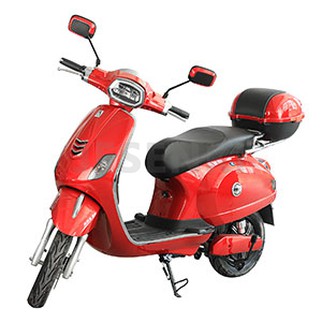
With increasingly diverse urban transportation options, lithium-ion scooters have become a popular choice for short-distance commuting, leisure travel, and more. "Lightweight" is a key factor consumers consider most when making purchasing decisions. But are lithium-ion scooters truly lightweight enough? What are the weight differences between different models? This article will reveal the truth about the weight of lithium-ion scooters by examining actual data and design logic.
I. What Determines the Weight of a Lithium Scooter?
The weight of a lithium-ion scooter is primarily determined by the following core factors:
1. Battery Capacity
The battery is one of the heaviest components of the entire scooter. Generally, a larger battery capacity results in higher power output and longer range, but also increases the weight.
For example:
A 250 Wh battery is lighter and suitable for short commutes.
Larger capacity batteries (500 Wh and above) are heavier, but offer a longer range.
2. Frame and Materials: Aluminum alloys and carbon fiber are lighter, while steel structures are generally heavier but stronger. Advanced lightweight materials help reduce the overall weight of the vehicle.
3. Motor and Controller: The power output and configuration of the powertrain also affect weight. High-performance motors and rugged controllers usually mean increased weight, but provide greater power output.
II. Actual Weight Analysis
The weight of commonly available Lithium Scooters varies significantly, generally falling into three categories:
| Model Category | Typical Weight Range (kg) | Application Scenarios |
| Lightweight Commuter | 8–12 kg | Short city trips, commuting |
| Mid-Performance | 12–16 kg | Increased battery capacity, balanced performance |
| Long Range/Heavy Load | 16–22 kg | Larger battery, stronger power, longer range |
As shown in the table above, lightweight commuter Lithium Scooters (approximately 8–12 kg) are significantly lighter than traditional electric bicycles or motorcycles, making them more convenient for carrying upstairs or transferring to public transport; while long-range/heavy load models are heavier due to their larger capacity batteries, but also offer stronger range and power performance.
III. What Does Lightweight Really Mean?
For consumers, "lightweight" isn't just about the weight; it's about the user experience:
✅ Easy to carry: Weighing under 10 kg, it can be lifted with one hand.
✅ Easy to store: Easily placed in the office, at home, or on public transportation.
✅ Flexible maneuvering: A lighter overall weight improves handling agility.
❌ Limited range: Too light usually means limited battery capacity, potentially resulting in a shorter range compared to larger capacity models.
Therefore, when judging whether a Lithium Scooter is lightweight, it's crucial to consider not only the weight but also your range requirements and usage scenarios.
IV. Selection Recommendations
Short-distance urban commuting: Prioritize lightweight models weighing 8–12 kg.
Long-range needs: Consider heavier mid-range or high-performance models.
Balancing portability and performance: Choose a balanced model in the 12–16 kg range.
Lithium Scoos do indeed have a significant advantage in terms of portability, especially compared to other traditional electric mobility devices. However, "lightweight" is not just a single number; it's a comprehensive performance indicator closely related to battery capacity, power output, and range. Understanding the design trade-offs behind different weights is crucial to finding the electric scooter that truly suits your needs during the purchasing process.