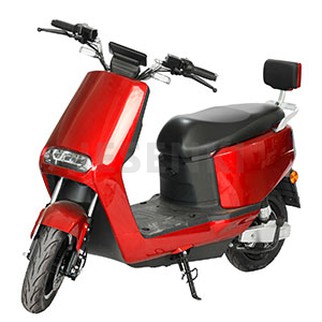
With the rapid popularization of electric mobility, lithium-ion scooters have become an important means of transportation for urban commuting, leisure travel, and even short-distance commuting. For consumers and buyers, range is one of the key indicators for evaluating the performance of a scooter. This time, we conducted real-world range tests on several mainstream lithium-ion scooters on the market to provide an objective reference for purchasing.
I. Test Methodology The test was conducted under standard urban road conditions. The rider weighed approximately 70kg. The test route included flat roads and slightly uphill sections, with the riding mode set to medium speed (approximately 15–20 km/h). All models were tested from a fully charged state, and the actual range and remaining battery power were recorded.
II. Test Vehicle Overview
The selected lithium-ion electric scooters differ in battery capacity, motor power, and vehicle design, covering the mainstream mid-to-low-end and high-end markets, and are representative:
Model A: Primarily designed for lightweight urban commuting, with a smaller battery capacity.
Model B: Balanced range and power.
Model C: High-capacity lithium battery, better suited for longer range needs.
III. Actual Range Test Results
The test results show significant differences in range performance among lithium-ion electric scooters with different configurations:
| Model | Battery Capacity (Wh) | Tested Range (km) | Evaluation |
| Model A | 250 Wh | ~18 km | Suitable for short commutes |
| Model B | 350 Wh | ~24 km | Balanced mid-range range |
| Model C | 500 Wh | ~32 km | Leading range performance |
The data shows that models with larger battery capacities and higher energy densities perform more stably and have longer ranges in actual tests. While lightweight models offer greater maneuverability, their range is significantly limited.
IV. Key Factors Affecting Range
1. Battery Capacity and Discharge Performance
Battery capacity directly impacts range. High-discharge-rate lithium batteries maintain stable voltage even under high loads, ensuring a more reliable range.
2. Motor Efficiency and Drive System
High-efficiency motors combined with efficient transmission reduce energy loss, resulting in a longer range with the same battery capacity.
3. Vehicle Weight and Air Resistance
Lighter vehicle design and optimized streamlined structure help reduce energy consumption.
4. Road Conditions and Riding Style
Actual range is also affected by road conditions (such as gradient and surface roughness) and riding speed; high-speed riding shortens range.
Real-world range tests show that the range of lithium-ion electric scooters is closely related to battery capacity, motor performance, and overall vehicle design. For users who need to commute long distances or use the scooter frequently, electric scooters with high battery capacity and high-efficiency motors are more advantageous. For urban users commuting short distances daily, medium-range models offer a good balance between portability and user experience.
In the future, with continuous advancements in battery technology, electronic control systems, and overall lightweight design, the range of lithium-ion battery scooters will continue to improve, providing users with a more efficient and convenient travel experience.